
At the end of April, the German government approved the key figures for the 2027 budget and its general financial planning up to 2030. Over the next four years, including supplementary budgets, around €200 billion in new debt is set to be taken on each year. Those not in the know might assume this signals a massive investment drive in domestic infrastructure. The reality, however, is sobering.
First, a brief overview of the background: In spring 2025, as part of an amendment to the Consitution, a so-called “Special Fund for Infrastructure and Climate Neutrality” (SVIK) and a so-called “sectoral exemption” for defence expenditure in the broader sense were approved. The SVIK comprises a total of €500 billion and is intended to facilitate additional investment in the aforementioned areas between 2025 and 2036. The sectoral exemption, however, is valid indefinitely and stipulates that defence expenditure exceeding 1% of nominal GDP is excluded from the debt brake rules. At present, the remaining borrowing capacity of the ‘Bundeswehr’ special fund (totalling €100 billion) is still being utilised. From 2028, defence funding will then once again be fully channelled through the core budget, thereby significantly increasing its new borrowing.
In the core budget, defence spending is set to rise from €83 billion to €180 billion between 2026 and 2030. The vast majority of this is likely to be spent on equipment, weapons or intelligence activities, with only a small portion going towards making bridges suitable for tanks or constructing military buildings. For the SVIK, the federal government is planning annual borrowing of between 50 and 60 billion euros in the coming years (2026: €58 billion). According to the original idea – and this was, after all, the justification for the constitutional amendment – these funds were now intended to addionally benefit transport and supply networks, as well as, above all, local infrastructure (e.g. health, education, digitalisation).
Furthermore, a series of reforms should have ensured the right conditions for the funds to be deployed swiftly and effectively. The resulting increase in economic growth would then have enabled the debt to be repaid at a later date. This would also have required a well-thought-out master plan to channel the funds efficiently into areas with a particularly strong impact on growth. Yes, that would indeed have been necessary, as the Federal Ministry of Finance now expects interest expenditure of almost €80 billion in 2030, compared with around €30 billion this year.
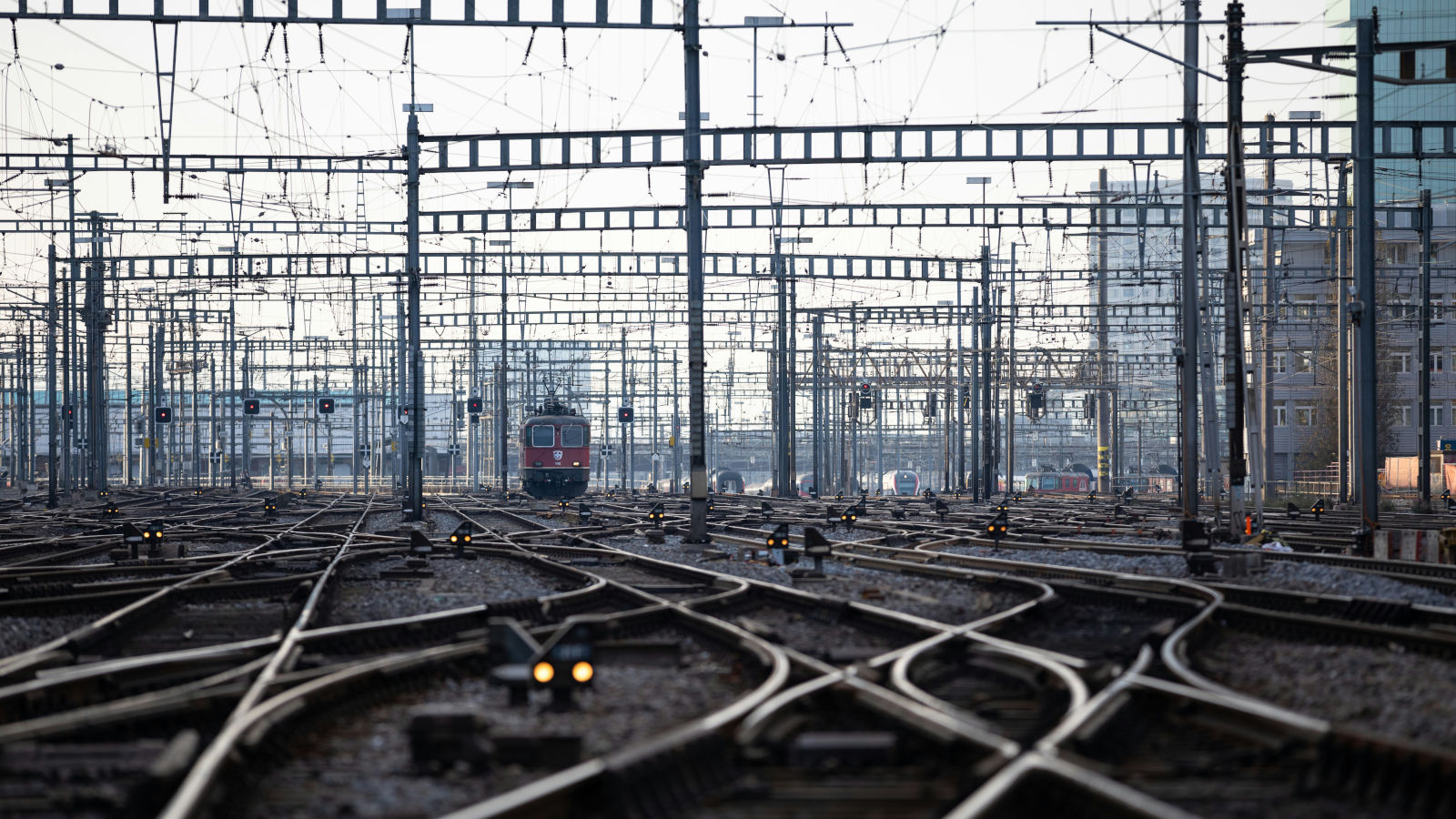
So what has become of these plans? The situation is best described by the comments of various market observers and research institutes: there is talk of a ‘shunting yard’, a ‘lack of additionality’, ‘misallocation of funds’, a ‘lack of political prioritisation’ or even a ‘lack of logical impact’. In fact, budget funds have been shifted to a considerable extent between the core and supplementary budgets; critics complain that this was partly intended to create room in the core budget for consumption purposes. An example: in 2026, federal investment in railways is set to amount to around 22 billion euros, but only 2.6 billion euros of this remains in the actual transport budget of the core budget. 2024 the value was still 16.1 billion euros.
“Even before the SVIK decision, the financial planning had already envisaged almost €18 billion flowing into the railway sector in 2027.”
The following figure shows the long-term trend in federal investment in roads, railways and waterways. In the past, investment in railways sometimes included capital increases designed to circumvent the debt brake. For federal trunk roads, a retrospective grant has been assumed for the future. In fact, without this, a number of new construction projects ready for development could not have been started. This situation is puzzling given the significant increase in general funding financed by debt. The same applies to the overall modest increase in road funding, even though a Herculean task lies ahead in terms of bridge renovation. And the waterways aren’t virtually getting any extra funding either, even though they are constantly praised for their energy-efficient transport capabilities. With the even nominal decline in rail funding from 2027 onwards, investment will once again be reduced. By way of comparison: even before the SVIK decision, the financial planning had already envisaged almost €18 billion flowing into the railway sector in 2027. The sharp rise is therefore by no means attributable solely to the SVIK.
ABOUT THE AUTHOR
Ludwig Dorffmeister
ifo Institute
Ludwig Dorffmeister, industry specialist at the Munich-based ifo Institute, has been monitoring the construction sector in Germany for about one and a half decades now. For the market analysis, he can, among others, draw on a large number of in-house survey results.
What remains is a sense of disillusionment, for instance that there is often no guarantee of additionality, earmarking or even the nature of an investment. In the energy and telecommunications sectors, too, little is being achieved with public funds, and network expansion continues to be financed predominantly through network charges or user fees and the level of returns admitted by the authorities. Others are surprised by the tight rein kept on local authorities, which receive on average only a good 60% of the €100 billion passed on to the federal states – that is just 12% of the €500 billion. At the same time, however, municipalities account for around 50% of all public investment in construction and provide around 70% of all fixed assets in the federal states, whilst the state governments themselves account for only 30%.
“The applied 10% rule does not guarantee additionality”
Incidentally, the Federal Government has not defined compliance with the ‘additionality’ principle in terms of absolute or real figures, but as an annual ratio: if the planned(!) investments in the core budget – adjusted for financial transactions and expenditure under the defence exemption – amount to at least 10%, the principle of additionality is deemed to have been met. The fact that all defence investments (excluding the Bundeswehr special fund) are taken into account, but not all defence expenditure of the core budget, has already been criticised by individual think tanks and the Federal Audit Office. If calculated consistently, the figure would be well below 10%. Furthermore, the ratio was already higher in 2024 and the trend is downward in the medium term.
In fact, the ifo Institute has demonstrated to the government that there were high rates of misappropriation and significant investment shortfalls in 2025. The situation improves in subsequent years, but the use of funds remains problematic. The Federal Ministry of Finance defended itself, among other things, by pointing out that the budget of the previous government, which was used for comparison, was far from being fully funded. Anyone interested in learning more about this topic is encouraged to consult the following sites:
ifo response on misappropriation
Fuest opinion on misappropriation
ABOUT THE AUTHOR
Ludwig Dorffmeister
ifo Institute
Ludwig Dorffmeister, industry specialist at the Munich-based ifo Institute, has been monitoring the construction sector in Germany for about one and a half decades now. For the market analysis, he can, among others, draw on a large number of in-house survey results.